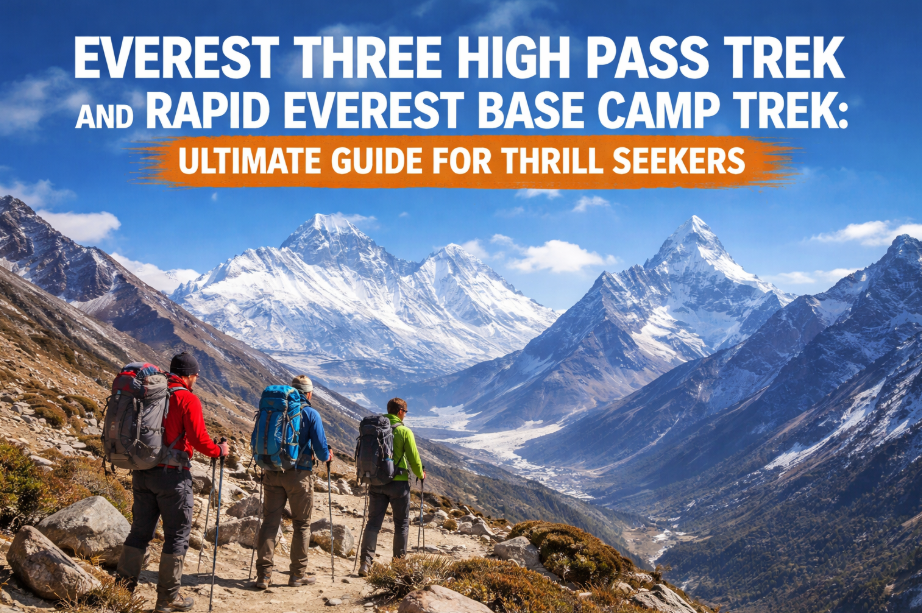
Everest Three High Pass Trek and Rapid Everest Base Camp Trek: Ultimate Guide for Thrill Seekers

For those who crave adventure beyond the ordinary, the Everest region offers some of the most exhilarating trekking experiences in the world. Among these, the Everest Three High Pass Trek and the Rapid Everest Base Camp Trek stand out as two iconic journeys that combine breathtaking landscapes, cultural immersion, and physical challenge.
Both treks take you deep into the heart of the Himalayas, yet they cater to different types of thrill seekers. Whether you are drawn to high-altitude passes or prefer a fast-paced route to Everest Base Camp, this guide will help you understand what makes each trek unique and how to choose the right one for your adventure.
Understanding the Everest Region Experience
The Everest region, also known as the Khumbu region, is more than just towering peaks. It is a living landscape of Sherpa culture, ancient monasteries, glacial rivers, and dramatic mountain views.
Trekkers can expect:
- Stunning views of Everest, Lhotse, Ama Dablam, and Nuptse
- Authentic Sherpa villages like Namche Bazaar and Dingboche
- Suspension bridges, alpine forests, and glacial valleys
- A strong sense of adventure at high altitude
Both the Everest Three High Pass Trek and the Rapid Everest Base Camp Trek offer these elements, but in different ways.
What Makes the Everest Three High Pass Trek Special
The Everest Three High Pass Trek is considered one of the most challenging and rewarding treks in Nepal. It is designed for experienced trekkers who want to explore beyond the standard trails and truly test their endurance.
This trek includes crossing three major high-altitude passes:
- Kongma La Pass (5,535 meters)
- Cho La Pass (5,420 meters)
- Renjo La Pass (5,360 meters)
Each pass offers dramatic panoramic views and a sense of achievement that few other treks can match.
What sets the Everest Three High Pass Trek apart is its diversity. You are not just walking to a single destination. Instead, you are circling through remote valleys, visiting places like Gokyo Lakes, Everest Base Camp, and Kala Patthar.
This trek is ideal for thrill seekers who:
- Want a physically demanding challenge
- Prefer less crowded routes
- Enjoy exploring remote and rugged terrain
- Have prior high-altitude trekking experience
However, it requires careful acclimatization and strong physical preparation.
The Appeal of the Rapid Everest Base Camp Trek
The Rapid Everest Base Camp Trek is designed for trekkers who want to reach Everest Base Camp in a shorter time frame without missing the essence of the journey.
Unlike the longer and more demanding routes, this trek focuses on efficiency while still delivering incredible views and experiences.
Key highlights include:
- A faster itinerary with optimized acclimatization
- Direct access to Everest Base Camp and Kala Patthar
- Cultural encounters in Namche Bazaar and Tengboche
- Stunning sunrise views over Everest
The Rapid Everest Base Camp Trek is perfect for:
- Travelers with limited time
- Moderately experienced trekkers
- Those who want a classic Everest experience without extended detours
While it is shorter, it still involves high altitude and requires good fitness and preparation.
Key Differences Between the Two Treks
Choosing between these two adventures depends on your goals, fitness level, and available time.
Here is a simplified comparison:
Duration
The Everest Three High Pass Trek typically takes 18 to 21 days. The Rapid Everest Base Camp Trek can be completed in 10 to 14 days.
Difficulty
The high pass trek is significantly more challenging due to steep ascents, high altitude, and technical sections. The rapid trek is demanding but more straightforward.
Route Experience
The Everest Three High Pass Trek covers a wide circuit with varied landscapes. The Rapid Everest Base Camp Trek follows a more direct route.
Crowds
The high pass trek is less crowded, especially in remote sections. The rapid trek follows the popular Everest Base Camp trail.
Adventure Level
The Everest Three High Pass Trek offers a more intense and adventurous experience. The Rapid Everest Base Camp Trek provides a balanced adventure with comfort.
Best Time to Go for Both Treks
Timing plays a crucial role in your trekking experience. The best seasons for both treks are:
Spring (March to May)
Autumn (September to November)
During these months, you can expect clear skies, stable weather, and excellent mountain visibility.
Winter treks are possible but extremely cold, especially for the Everest Three High Pass Trek. Monsoon season brings heavy rain and poor visibility, making it less ideal.
Physical Preparation and Fitness Tips
No matter which trek you choose, preparation is essential. High altitude trekking is physically demanding and requires both endurance and mental strength.
Here are some practical tips:
- Build cardiovascular endurance through hiking, running, or cycling
- Practice trekking with a loaded backpack
- Include strength training for legs and core
- Focus on gradual altitude exposure if possible
For the Everest Three High Pass Trek, training should be more intensive due to its demanding nature.
See also: Choosing the Right Travel Trailer for Coastal Trips
Acclimatization and Safety Considerations
Altitude sickness is a serious concern in the Everest region. Both treks involve reaching elevations above 5,000 meters.
To stay safe:
- Follow a gradual ascent plan
- Stay hydrated and avoid alcohol
- Take rest days for acclimatization
- Listen to your body and descend if symptoms appear
The Everest Three High Pass Trek requires extra caution due to repeated high-altitude crossings.
Hiring an experienced guide can significantly enhance safety and overall experience.
Packing Essentials for a Successful Trek
Packing smart can make a big difference in your comfort and safety.
Key items include:
- Warm layered clothing suitable for extreme cold
- High-quality trekking boots
- Sleeping bag rated for sub-zero temperatures
- Trekking poles for stability
- Basic first aid kit and personal medications
For the Everest Three High Pass Trek, additional gear like microspikes may be required depending on conditions.
Cultural Highlights Along the Way
Both treks are not just about mountains. They also offer a deep connection with local culture.
You will encounter:
- Buddhist monasteries like Tengboche
- Prayer flags and mani walls
- Traditional Sherpa hospitality
- Local cuisine such as dal bhat and yak-based dishes
Taking time to engage with the culture adds a meaningful dimension to your journey.
Choosing the Right Trek for Your Adventure Style
If you are still unsure which trek suits you best, consider your priorities.
Choose the Everest Three High Pass Trek if you want:
- A challenging and less crowded adventure
- Diverse landscapes and multiple highlights
- A sense of exploration beyond the standard route
Choose the Rapid Everest Base Camp Trek if you prefer:
- A shorter and more efficient itinerary
- A classic Everest experience
- A balance between adventure and comfort
Both treks are unforgettable in their own way, and your choice should align with your goals and experience level.
Start Your Himalayan Journey with Confidence
Embarking on a trek in the Everest region is more than just a physical journey. It is an experience that challenges your limits, expands your perspective, and leaves lasting memories.
Whether you choose the Everest Three High Pass Trek or the Rapid Everest Base Camp Trek, preparation and guidance are key to making the most of your adventure.
If you are planning to hike or trek in Nepal and want honest guidance, well-paced itineraries, and deep local Himalayan knowledge, feel free to get in touch. Whether it’s Everest Base Camp, high passes, or quieter trails in the Everest region, they help you plan a safe and meaningful journey.
📱 WhatsApp / Contact: +977 9851205116
📧 Gmail: ebchike99@gmail.com